

The Four Seasons - The most famous description of nature in music history
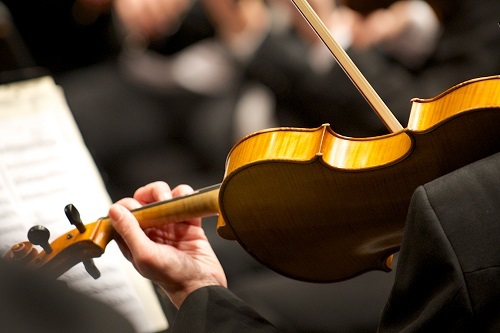
Category: Concert
The Four Seasons - The most famous description of nature in music history
Antonio Vivaldi: The Four Seasons
Further in the program:
George Frideric Handel: Water Music, Orchestral Suite No. 1
Joseph Haydn: Farewell Symphony
The renowned Czech Chamber Philharmonic Orchestra, Prague, which is also very well known in Germany, presents three highlights from its extensive repertoire - two masterpieces of Baroque music (Antonio Vivaldi's "Four Seasons" and George Frideric Handel's "Water Music") and one of the most important representatives of Viennese Classicism (Joseph Haydn with his "Farewell Symphony"). The three pieces have been carefully selected and arranged so that they form a meaningful combination, an appealing unity and round off the musical evening in style.
Antonio Vivaldi's probably best-known work is "The Four Seasons". The composer, himself a master violinist, combined four violin concertos - each concerto describes a season. Above all, natural phenomena are imitated: In the
spring, it is a jumble of different chirping bird species. In summer, you can feel the heavy heat and the wait for something to cool down, then a heavy thunderstorm; then the buzzing of bees and swarms of mosquitoes. A drinking song and hunting motifs describe the fall. Wind, rain, perhaps even snowfall, but warming up by the fire and finally an ice skater illustrate the contrasts of winter: the cozy life indoors and the harsh climate outside. Many famous composers (including Joseph Haydn) have dedicated themselves to the four seasons, but the most ingenious musical description of nature comes from Antonio Vivaldi.
Various anecdotes surround the creation of George Frideric Handel's "Water Music"
: The composer is said to have moved from Hanover (related to the English royal family) to London and made his "debut" with his new master, King George I, with the incidental music for a royal pleasure cruise on the Thames. However, this is only documented for the second suite. In any case, His Royal Highness was so
enthusiastic that he had the "Water Music" and individual pieces from it repeated several times.
The "Farewell Symphony" (No. 45) was composed during
Joseph Haydn's employment as Kapellmeister to Prince Esterházy. As the musicians - with a few exceptions - had to serve there during the season without contact with their families, they longed for a vacation. This was also noticeable in their music: It became increasingly sluggish, ponderous and tired, until the soloists - one after the other - left the stage. Not the only example of Haydn's indestructible yet subtle humor.
Admission 19:00 - start 20:00